

Grootste schenking in afgelopen tien jaar
Nieuws
2 januari 2017
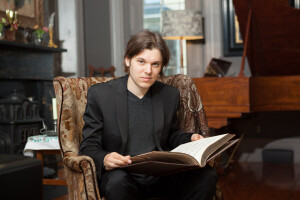
I first got interested in historical instruments and especially historical pianos while studying modern piano at the New England Conservatory in Boston, USA. There is a collection of historical pianos in a small town in Massachusetts, for years run by two enthusiasts who organise concerts and workshops with their instruments and are very welcoming to anyone interested. Several visits to this collection together with some illuminating lessons from Robert Levin and Peter Serkin, both of whom had a lot of experience with historical keyboards of all types, marked the beginning of my interest in historical keyboards. The sound and the action of these pianos are so intimately connected with the music written for them that it made perfect sense to me to try to whenever possible play Mozart on a Mozart-era fortepiano, C.P.E. Bach on a clavichord, and Chopin on a Pleyel. To further my studies I decided to move to Amsterdam and enrol in the Early Keyboards Program, which gave me an opportunity to not only study fortepiano, but other historical keyboards and related subjects, such as improvisation and basso continuo.
It had been my dream to have an 18th century Viennese type fortepiano to perform the classical repertoire of Mozart, Haydn, early Beethoven and others, the style I am most drawn to. The NMF made it possible for me to have such an instrument. This particular piano has two sets of action with completely different sounds - one with leather covered hammers and the other with bare wooden hammers. Both types of actions were around during the 1770s and 80s, the latter type being virtually unknown to modern audiences. This instrument opens up new exciting possibilities for exploring of what the music of the time might have sounded like.
